The Department of Rights & Academic Care (DRAC) is a structured and awareness-driven institutional body dedicated to promoting clarity, responsibility, and informed understanding in the areas of education and individual rights. Established with the intention of addressing the growing need for organized guidance, DRAC functions as a centralized platform where individuals can access reliable, well-structured, and purpose-oriented information.In an environment where education systems are continuously evolving and access to information is rapidly increasing, individuals often face confusion, misinterpretation, and lack of direction. DRAC has been conceptualized to reduce this gap by presenting knowledge in a disciplined and accessible manner. The organization focuses on awareness rather than authority, ensuring that individuals are empowered through understanding rather than influenced through pressure.


Foundation and Concept
The idea behind DRAC originated from the observation that a large number of students and parents struggle not due to lack of opportunity, but due to lack of structured awareness.Information is widely available, but it is often fragmented, inconsistent, or difficult to interpret.
DRAC was developed as a response to this challenge. Its foundation is built on three core principles:
Clarity over Complexity
Awareness over Assumption
Structure over Disorder
By integrating these principles into its framework, DRAC aims to provide a stable and reliable system that individuals can depend on for guidance and understanding.
DRAC operates as an independent, structured body designed to reflect the discipline andseriousness of a formal department. It is not a private consultancy, nor does it function as agovernment institution. Instead, it exists as a distinct entity focused on awareness, guidance,and academic care.
The organizational structure emphasizes neutrality, ensuring that all information provided isbalanced, responsible, and free from bias. DRAC does not engage in enforcement, decision-making authority, or institutional control. Its role is strictly centered around facilitating understanding and promoting informed perspectives.
The primary purpose of DRAC is to support individuals in navigating educational systems andunderstanding their rights through structured awareness.
Its objectives include:
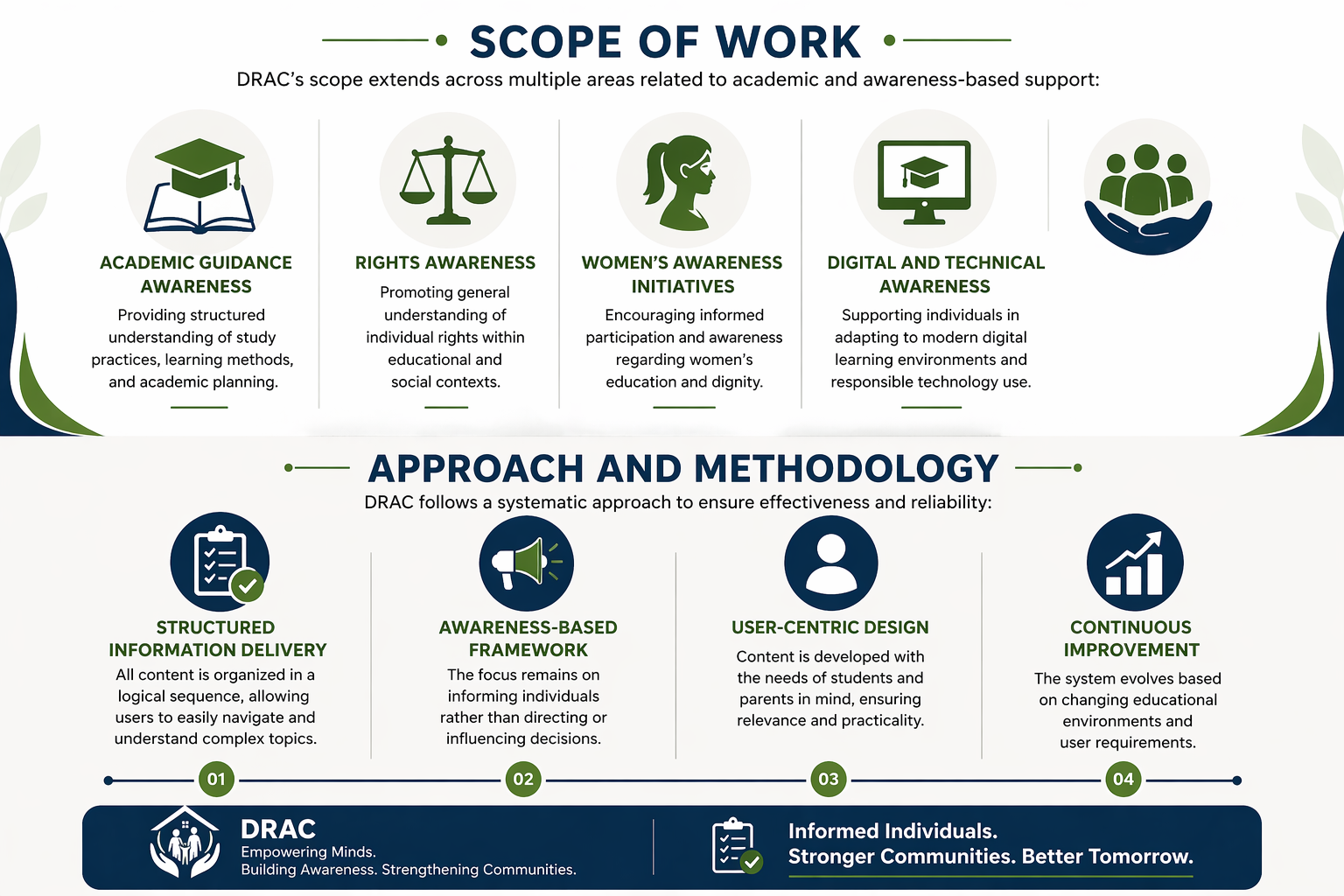
Providing accessible and reliable academic information
Promoting awareness regarding individual and educational rights
Supporting students in developing disciplined learning practices
Assisting parents in understanding modern educational frameworks
Encouraging responsible engagement with academic and digital environments
To create a society where individuals are informed, aware, and capable of making responsibledecisions in their academic and personal development through structured knowledge andguidance.
To deliver clear and structured academic awareness
To promote understanding of rights and responsibilities
To support individuals through accessible information systems
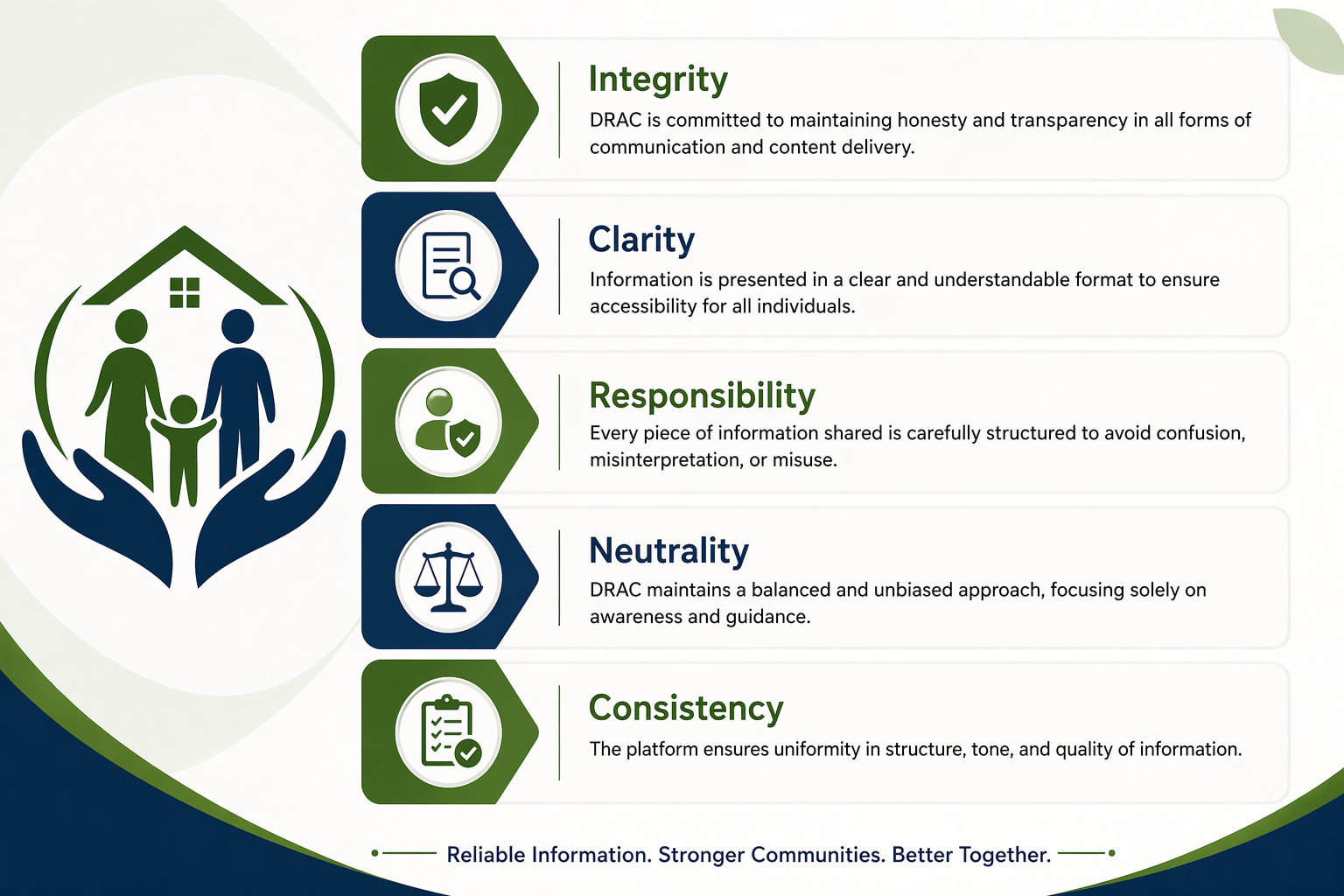
To maintain ethical and responsible communication
To contribute toward a disciplined and informed academic culture